SPECIAL SESSION #14
Sensors, Novel Measurement Methods, Transduction Principles and Procedures for the Built, Historical Areas, and Living Environment
ORGANIZED BY
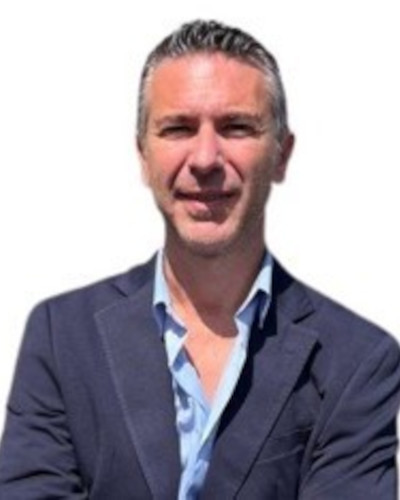 Carlo Trigona
Carlo Trigona
University of Catania, Italy
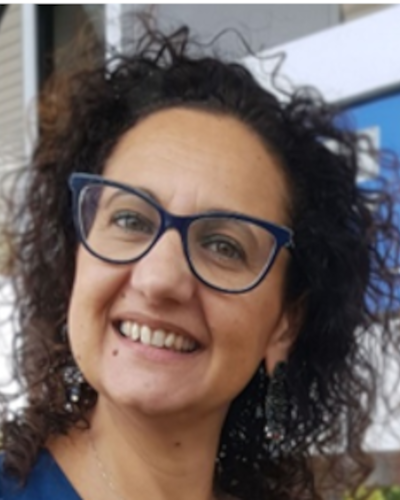 Anna M. Gueli
Anna M. Gueli
University of Catania, Italy
SPECIAL SESSION DESCRIPTION
The widespread adoption of smart systems and advanced solutions in instrumentation and measurement is creating new challenges and opportunities for applications in the built environment, areas of interest, and living environments. Key issues include the monitoring and management of open spaces and buildings, as well as the enhancement of public accessibility and enjoyment. Addressing these challenges requires the development of advanced measurement methods, innovative transduction principles, and dedicated procedures and algorithms tailored to these contexts. Given the complexity of these scenarios, a multidisciplinary approach is essential, bringing together expertise from diverse scientific and technological fields. This Special Session aims to explore the full life cycle of novel sensors, transducers, and measurement systems applied to environments and spaces of societal and historical relevance, covering conceptual design, operating principles, validation, characterization, and assessment of environmental impact.
TOPICS
Submissions are welcome on, but not limited to, the following topics:
- Sensors for the environment;
- Innovative transduction principles and devices for the built environment, historical areas, and living environments;
- Emerging technologies for the analysis and monitoring of areas of interest;
- Measurement techniques and optimization strategies for Living Environment applications;
- Algorithms and procedures;
- Novel measurement methods.
ABOUT THE ORGANIZERS
Professor Carlo Trigona received his M.S. in Automation Engineering and Control of Complex Systems (cum laude) in 2006, followed by a Ph.D. in Electronic, Automation, and Control of Complex Systems in 2010 from the same university. His post-doctoral research included positions at University Montpellier in France (2010-2011), University of Catania (2011-2017), and Chemnitz University of Technology in Germany (2017-2018). He then served as an Assistant Professor (2018-2020) and a tenure-track Professor (2020-2023) at DIEEI, University of Catania.
Professor Trigona has received several awards for his research endeavors, notably the 2020 IEEE-I&M Outstanding Young Engineer Award for his exceptional contributions to advancing I&M concepts in sensors and transducers for energy harvesting, and the 2023 IEEE-I&M Best Application Award for his innovative sensors that incorporate the response of plants to a wide range of environmental factors, becoming low, environmentally friendly, biodegradable instruments. 2024 IAAM Scientist Medal.
Currently, he is Director's Delegate of research and President of the Master Degree in Electrical Engineering for Sustainable Green Energy Transition.
Since 2025, he has been a member of the AdCom of the IEEE Sensors Council and a Distinguished Lecturer for the IEEE-I&M Society for 2026-2028, with the lecture topic 'Nature-based and Living Solutions: Evolving from Green to More-than-Green to Advance Sustainable Technologies in Measurement Systems'. Regarding his research profile, he has co-authored more than 300 scientific publications with over 3000 citations. These contributions span chapters in books, papers in international journals, proceedings of international conferences, trademarks, and patents. His research interests encompass sensors, transducers, MEMS, fluxgate magnetometers, energy harvesting, as well as innovative areas such as green and biodegradable sensors and transducers based on living organisms.
Anna Maria Gueli, is a Professor in Applied Physics at the University of Catania and the Head of PH3DRA (Physics for Dating Diagnostics Dosimetry Research and Applications) laboratories, included in the European Research Infrastructure for Heritage Science through the INFN Cultural Heritage Network (CHNet). Her research mainly concerns the dating of archaeomaterials through stimulated luminescence (TL&OSL) and analytical techniques in Art Conservation. These last include interdisciplinary approaches to microclimate monitoring and applied colorimetry starting from the optical properties of materials. She received the Master in Physics from the University of Catania discussing a thesis in archaeometry related to the experimental research performed during the Erasmus Project at the University of Bordeaux (France). In this last academy she obtained the DESS (Diplôme d'études supérieures spécialisées) in Physical Methods in Archaeology and Museography. After obtaining a scholarship from INFM, she received a Ph.D. in Physics from the University of Catania with a thesis in radiation dosimetry, mainly focused on archaeological dating. She obtained a post-doc scholarship from CNR and a research grant from the University of Catania. She was Chercheur Associé of the European program GRUNDTVIG Adult Education Program and Professeur Invitée à temps plein of the University of Bordeaux. She coordinated the activities of Italian researchers within the European Research Group GdRE-TCA “Ceramic Building Materials and new dating methods”. Elected member of the Executive Council of the Italian Association of Archaeometry (AIAr) covering the role of General Secretary and Treasurer. Professor Gueli is the Catania’s University Delegate in the Permanent Thematic Working Group of the Regional Strategy of the Innovation for the Intelligent Specialization in the area of "Tourism, cultural heritage, culture" and in the National Technological Cluster Project TICHE - Technological Innovation in Cultural Heritage.