SPECIAL SESSION #07
IoT-Enabled Multimodal Sensing for Smart Indoor Monitoring of Elderly and Care-Dependent Individuals
ORGANIZED BY
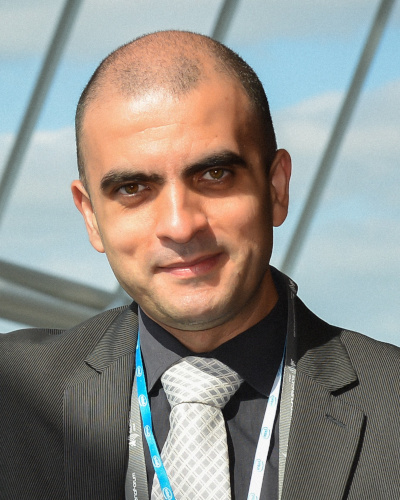 Peppino Fazio
Peppino Fazio
Ca' Foscari University of Venice, Department of Molecular Sciences and Nanosystems
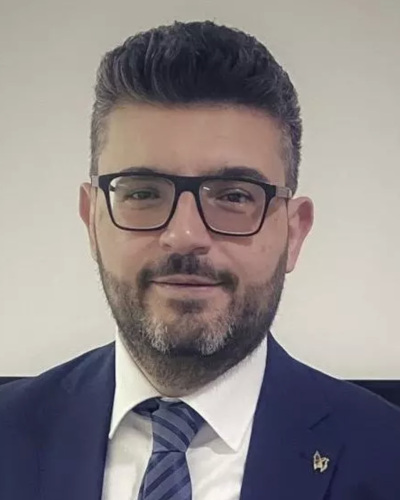 Francesco Lamonaca
Francesco Lamonaca
University of Calabria, DIMES
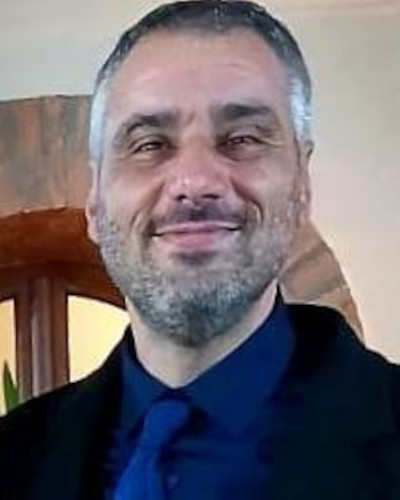 Antonio Francesco Gentile
Antonio Francesco Gentile
CNR of Cosenza, Italy
SPECIAL SESSION DESCRIPTION
The continuous development of technology in sensing and data transmission, enabled the deployment of network devices in all possible life scenarios. The attention of this session is focused on the integration of IoT sensing for continuous indoor monitoring of elderly individuals and persons requiring care. By combining ambient sensors, wearable devices, and intelligent data-driven models, the local network aims to automatically detect critical events (e.g., falls, health anomalies, abnormal users behaviors), assess daily activity patterns, and support personalized, non-intrusive care. Emphasis is placed on privacy-preserving sensing, robust context recognition, and reliable real-time operation in different indoor environments.
TOPICS
This special session is aimed to (but not limited to) the collection of new and innovative works regarding:
- Data/Sensor Fusion and Multimodal Data Integration (combining inertial, environmental, vision-free, and physiological sensors for accurate context recognition);
- Fall Detection and Anomaly Recognition (developing scalable algorithms robust to noise, occlusions, and varying user behaviors);
- Activity and Behavior Modeling (identifying deviations from normal routines to predict potential health risks);
- Privacy-Preserving Sensing (using non-camera modalities or privacy-enhancing ML to protect user dignity);
- Edge AI and Low-Power Processing (designing efficient models suitable for embedded devices in smart homes);
- Indoor Localization and Tracking (accurate, low-cost location tracking without requiring intrusive hardware);
- Personalization and Adaptability (systems that learn from individual users’ patterns without excessive manual calibration);
- Interoperability and Standards (ensuring seamless communication across heterogeneous IoT devices and platforms);
- IoT and Human Factors (designing solutions that can fit the needs and comfort of elderly users);
- Wireless Sensors Network Design (proposing of dedicated architectures for maximizing the efficiency of IoT technologies in indoor environments).
ABOUT THE ORGANIZERS
Peppino Fazio (Member, IEEE) received the Ph.D. degree in Electronics and Communications Engineering, University of Calabria (UNICAL - Italy) in January 2008 and completed his habilitation as Associate Professor in April 2017. After 12 years of Assistant Professor in UNICAL, he is Associate Professor at the Ca’ Foscari University of Venice (UNIVE), in the Department of Molecular Sciences and Nanosystems (DSMN), from January 2021. From May 2008 to September 2008, he was a Visiting Research Fellow with the UPV of Valencia (Spain), GRC Research Group. He collaborates also, from 2017, with the VSB – Technical University of Ostrava (Czech Republic), as senior research fellow. He is co-author of more than 160 papers (more than 65 in International Journals) and one book, all indexed in Scopus and/or WoS. He has been a member of various start-up companies and recipient of national and international awards (e.g. the Intel Business Challenge Award in 2013). He co-advised more than 70 BS and MS students and three Ph.D. students. His research interests include mobile communication networks, IP QoS architectures, wireless and wired networks, mobility modelling for WLAN environments, mobility analysis for prediction purposes, routing, vehicular networking, MANET, VANET and Quantum Key Distribution Networks.
Francesco Lamonaca (Senior Member, IEEE) received the M.S. degree in computer science engineering and the Ph.D. degree in computer and system science from the University of Calabria, Cosenza, Italy, in 2005 and 2010, respectively, and the doctorate degree equivalences in science and engineering science from the Université Libre de Brussels, Brussels, Belgium, in 2010 and 2011, respectively. He is currently an Associate Professor of Electronic Measurements with the University of Calabria. His current research interests include measurements, signal processing for structural health monitoring, non-invasive monitoring and testing, IoT-based monitoring systems, synchronization of networking measurement instruments and sensor measurements for medical use, and measurements and systems for the elaboration of measurement information based on artificial intelligence. Dr. Lamonaca is a member of the TC-10—Waveform Generation, Measurement and Analysis, the TC-25 Medical Measurement, and the TC-37—Measurements and Networking of the IEEE Society on Instrumentation and Measurement (IM), IEEE, IM, GMEE, IAHR, and International Measurement Confederation (IMEKO). He was the Special Session Chair of MeMeA 2016 and organized the special session “Smart Devices for Biomedical Applications and Health Parameters Monitoring.” He is the Vice-Officer of Commission A—Electromagnetic Metrology of the Union Radio Scientifique Internationale (International Union of Radio Sciences)—Italian National Committee. He won competitions as first classified: the University of Calabria, Young Researchers 2010 and 2012; GMEE, Mobility Research Grants 2011; TE-RE-RD, Best Paper Awards 2014 and 2020, the Best Poster Award 2019, the IEEE Vehicular Technology/Communication Society Joint Chapter Italy Section Concerning with Innovative Ideas Against Corona Virus, 2020, and several outstanding reviewer awards. He is the Editor in Chief of Acta IMEKO. He is the Associate Editor of Sensors MDPI. He is the General Chair of the IEEE Workshop on Metrology for Living Environment 2022 and 2023, and the IEEE conference on Metrology for Archeology in 2022.
Antonio Francesco Gentile received his Degree in Computer Engineering from the University of Calabria. He currently serves as a Senior Systems Engineer and Technologist at ICAR-CNR. His research and professional activities focus on network security, vulnerability assessment, and the design of secure MANETs for IoT systems. He has extensive experience in WSN and Mesh networks, particularly within the Res Novae Smart Cities project. Antonio has authored numerous scientific publications, including book chapters for Springer’s "Internet of Things" series and articles for international journals like BSD Magazine. His academic contribution includes serving as a Contract Professor of Network Security for the Master’s Degree in Computer Engineering at the University of Calabria (DIMES) from 2019 to 2023. He holds the Cisco Certified Network Associate (CCNA 1-4) certifications and a specialization in Legal Informatics.