SPECIAL SESSION #06
New non-intrusive IoT paradigms based on unconventional AI approaches for and by measurement systems and methods
ORGANIZED BY
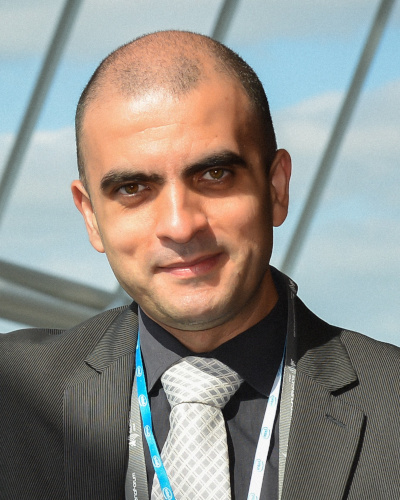 Peppino Fazio
Peppino Fazio
DSMN - Ca' Foscari university of Venice, Italy
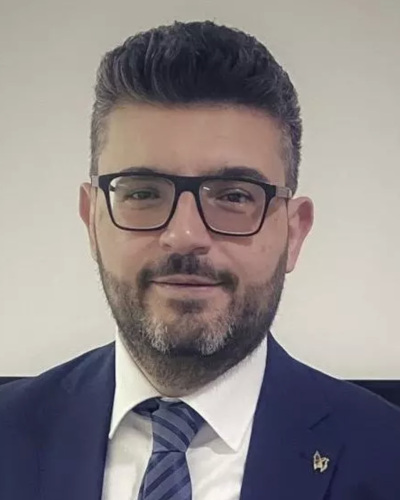 Francesco Lamonaca
Francesco Lamonaca
DIMES - University of Calabria, Italy
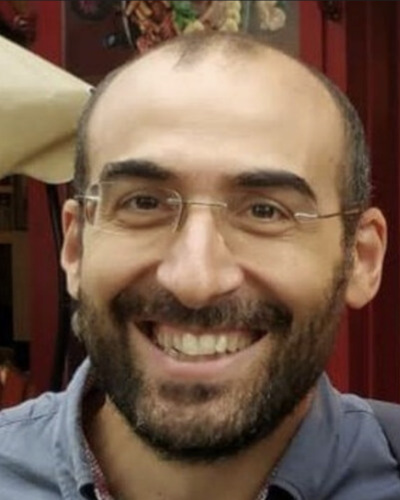 Mauro Tropea
Mauro Tropea
DIMES - University of Calabria, Italy
SPECIAL SESSION DESCRIPTION
As regards the existing living environment, the IoT is penetrating the market with the deployment of a huge set of sensors for monitoring several parameters, which can be considered to be very intrusive. This session, instead, is dedicated (but not limited) to the last research results regarding the deployment of the IoT paradigm in a non-intrusive way, by limiting the number of new sensors to be added into the living environment and by exploiting, instead, the strength of the last Machine Learning (ML) and Artificial Intelligence (AI) approaches, which are able to extract implicit features from aggregate entities (such as the overall energy consumption in domestic or industrial environments, crowd mobility data, aggregated temperature/humidity data, and so on).
TOPICS
This special session is aimed to (but not limited to) the collection of new and innovative works regarding:
- Non-Intrusive Load Monitoring for Domestic or Industrial Environments;
- Sampling Frequency Optimization for IoT Data Collection and Mining;
- Application of Novel ML and AI Algorithms for Energy Consumption Optimization;
- Advanced Security in IoT Living Environments;
- Data Disaggregation for Devices Recognition and/or User Behavior Optimization;
- Unconventional Approaches for Measured Data Classification or Prediction;
- Measured Data Domain Mapping (e.g. from time to frequency, from data to image, from data to sound, etc.), for Optimized Features Extraction;
- Telecommunication Systems for IoT Environments;
- Emission analysis in transportation systems;
- Environmental monitoring in smart cities;
- IoT-based approaches for smart irrigation;
- Energy wasting IoT-based for Smart Irrigation Systems;
- Virtual sensors.
ABOUT THE ORGANIZERS
Peppino Fazio received the Ph.D. degree in Electronics and Communications Engineering, University of Calabria (UNICAL - Italy) in January 2008 and completed his habilitation as Associate Professor in April 2017. After 12 years of Assistant Professor in UNICAL, he is Associate Professor at the Ca’ Foscari University of Venice (UNIVE), in the Department of Molecular Sciences and Nanosystems (DSMN), from January 2021. From May 2008 to September 2008, he was a Visiting Research Fellow with the UPV of Valencia (Spain), GRC Research Group. He collaborates also, from 2017, with the VSB – Technical University of Ostrava (Czech Republic), as senior research fellow. He is co-author of more than 160 papers (more than 65 in International Journals) and one book, all indexed in Scopus and/or WoS. He has been a member of various start-up companies and recipient of national and international awards (e.g. the Intel Business Challenge Award in 2013). He co-advised more than 70 BS and MS students and three Ph.D. students. His research interests include mobile communication networks, IP QoS architectures, wireless and wired networks, mobility modelling for WLAN environments, mobility analysis for prediction purposes, routing, vehicular networking, MANET, VANET and Quantum Key Distribution Networks.
Francesco Lamonaca (Senior Member, IEEE) received the M.S. degree in computer science engineering and the Ph.D. degree in computer and system science from the University of Calabria, Cosenza, Italy, in 2005 and 2010, respectively, and the doctorate degree equivalences in science and engineering science from the Université Libre de Brussels, Brussels, Belgium, in 2010 and 2011, respectively. He is currently an Associate Professor of Electronic Measurements with the University of Calabria. His current research interests include measurements, signal processing for structural health monitoring, non-invasive monitoring and testing, IoT-based monitoring systems, synchronization of networking measurement instruments and sensor measurements for medical use, and measurements and systems for the elaboration of measurement information based on artificial intelligence. Dr. Lamonaca is a member of the TC-10—Waveform Generation, Measurement and Analysis, the TC-25 Medical Measurement, and the TC-37—Measurements and Networking of the IEEE Society on Instrumentation and Measurement (IM), IEEE, IM, GMEE, IAHR, and International Measurement Confederation (IMEKO). He was the Special Session Chair of MeMeA 2016 and organized the special session “Smart Devices for Biomedical Applications and Health Parameters Monitoring.” He is the Vice-Officer of Commission A—Electromagnetic Metrology of the Union Radio Scientifique Internationale (International Union of Radio Sciences)—Italian National Committee. He won competitions as first classified: the University of Calabria, Young Researchers 2010 and 2012; GMEE, Mobility Research Grants 2011; TE-RE-RD, Best Paper Awards 2014 and 2020, the Best Poster Award 2019, the IEEE Vehicular Technology/Communication Society Joint Chapter Italy Section Concerning with Innovative Ideas Against Corona Virus, 2020, and several outstanding reviewer awards. He is the Editor in Chief of Acta IMEKO. He is the Associate Editor of Sensors MDPI. He is the General Chair of the IEEE Workshop on Metrology for Living Environment 2022 and 2023, and the IEEE conference on Metrology for Archeology in 2022.
Mauro Tropea (Member, IEEE) received the master’s degree in April 2003 and the Ph.D. degree in January 2009 in Computer Engineering from the University of Calabria (UNICAL), Cosenza, Italy. Since 2003, he has been with the Telecommunications Group at the DIMES Department and is a member of the CULTURE Laboratory. From May 2008 to October 2008, he was a visiting researcher at the Telecommunication Department of ESA ESTEC, Noordwijk, The Netherlands. Since 2023, he has been an Assistant Professor at the DIMES Department. He has served in various roles at international conferences and is currently a member of the editorial board of the prestigious journal Vehicular Communications. His research interests include satellite communications, QoS architectures, bio-inspired algorithms, VANETs, FANETs, hierarchical networks, and multicasting.