SPECIAL SESSION #02
Age-Friendly Living Environments: Adaptive Spaces, Multimodal Sensing, and Intelligent Technologies for Healthy Aging
ORGANIZED BY
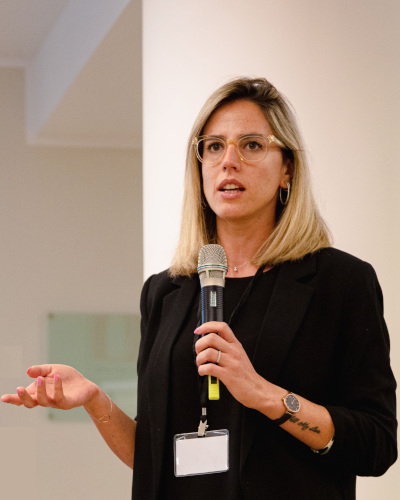 Sara Casaccia
Sara Casaccia
Polytechnic University of Marche, Italy
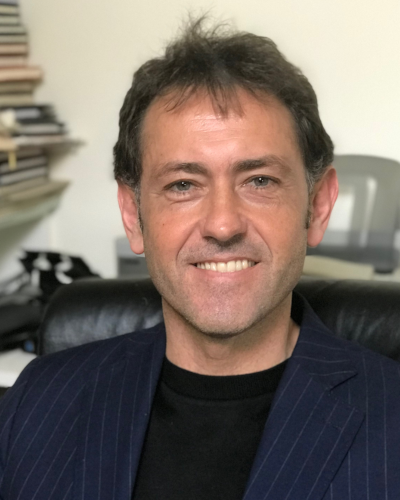 Gian Marco Revel
Gian Marco Revel
Polytechnic University of Marche, Italy
SPECIAL SESSION DESCRIPTION
Living environments must play a central role in enabling older adults to remain independent, active, and healthy. To achieve this, such spaces must be conceived as age-friendly environments capable of supporting a healthy lifestyle, facilitating social participation, and promoting a high quality of life for all residents. As populations age, ensuring that homes and shared spaces adapt to the evolving needs, abilities, and comfort of their inhabitants becomes increasingly essential.
In this context, Active and Assisted Living (AAL) technologies and monitoring systems are crucial for creating environments that are not only safe and supportive, but also capable of dynamically adjusting to individual conditions. Monitoring both the environment and the person enables the detection of physiological changes, behavioral patterns, Activities of Daily Living (ADLs), and environmental factors that may affect comfort, safety, and wellbeing. Measuring parameters such as physiological signals, movement patterns, indoor comfort metrics, and environmental quality provides actionable insights for personalized interventions and long-term health support.
However, designing and deploying such monitoring systems introduces significant scientific and technological challenges, especially in multi-resident settings, where overlapping signals complicate the association between data and individuals. Addressing these challenges requires advanced methodologies for sensing, data fusion, privacy-preserving analytics, and adaptive system design.
TOPICS
This special session focuses on technologies, methodologies, and future perspectives for next-generation age-friendly living environments. Particular attention is devoted to emerging sensors and applications, including but not limited to:
- Robotics and assistive systems;
- Wearable and nearable sensors;
- Environmental and comfort monitoring;
- Mobile health (m-health) platforms;
- Artificial Intelligence for recognition, prediction, and personalization;
- Data fusion and signal processing;
- Virtual Reality (VR) and digital twins for simulating and testing living environments before deployment;
- Data fusion and context-aware computing for multi-resident settings.
Contributions that emphasize metrological considerations, such as measurement uncertainty, calibration, repeatability, sensor accuracy, and reliability, are especially encouraged.
ABOUT THE ORGANIZERS
Sara Casaccia is an Assistant Professor at the Department of Industrial Engineering and Mathematical Sciences (DIISM) of Università Politecnica delle Marche (UNIVPM), working in the field of Mechanical and Thermal Measurements. She received her Ph.D. in Industrial Engineering from UNIVPM in 2015. Her research focuses on measurement methodologies for wellbeing and comfort in the built environment, quality assessment, and non-invasive monitoring techniques, with a special interest in data analysis and artificial intelligence applications for smart environments, Ambient Assisted Living (AAL), and physiological and environmental parameters.
Gian Marco Revel is Full Professor of mechanical and thermal measurement at the Università politecnica delle Marche (UNIVPM), Ancona, Italy where he is Rector Delegate for European Research. He received the Ph.D. degree in mechanical measurements from the University of Padua, Italy in 1998. His research focuses on sensors and measurement technologies for buildings, health and industrial applications.