SPECIAL SESSION #11
Chemical Metrology for Reliable Environmental Monitoring: Traceability, Uncertainty and Data Quality
ORGANIZED BY
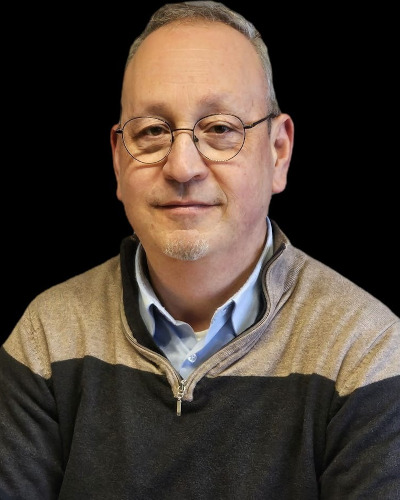 Alfredo Aloise
Alfredo Aloise
University of Calabria, Italy
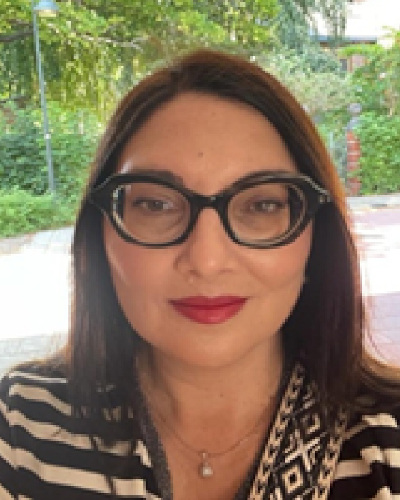 Rosalba Passalacqua
Rosalba Passalacqua
University of Messina, Italy
SPECIAL SESSION DESCRIPTION
The reliability and traceability of chemical measurements in environmental monitoring are crucial to ensure data quality and usability across scientific, industrial, and regulatory contexts. This proposed special session aims to highlight the role of chemical metrology as a fundamental tool for achieving comparability and accuracy of environmental data, with a focus on both fundamental research and industrial applications.
The session will cover innovative metrological methodologies, advanced analytical techniques, and novel measurement systems for determining chemical parameters in complex environmental matrices (air, water, soil, waste). Special emphasis will be placed on calibration and validation processes, the use of reference materials, measurement uncertainty evaluation, and data quality assurance procedures.
Industrial case studies demonstrating how metrological principles can enhance sustainability and the effectiveness of environmental monitoring systems are particularly encouraged.
The session aims to foster interaction between researchers, industry, and regulatory bodies, promoting the exchange of experiences and best practices in the field of chemical metrology applied to environmental monitoring.
TOPICS
Topics of interest include (but are not limited to):
- Chemical metrology;
- Environmental monitoring;
- Data quality;
- Reference materials;
- Industrial applications.
ABOUT THE ORGANIZERS
Alfredo Aloise is an Associate Professor of Industrial Chemistry (CHEM-04/A) at the University of L’Aquila (Italy). He received his PhD in Chemical and Materials Engineering in 2008 at the University of Calabria. His expertise centres on applied heterogeneous catalysis for sustainable chemical processes and environmental protection. His current research focuses on the design, synthesis and advanced characterization of zeolitic and nanostructured catalysts (e.g., MFI, FER, BEA, MCM-41) for the conversion of low-carbon and waste-derived feedstocks into fuels and high-value chemicals. His research spans the entire development chain: from catalyst preparation and physico-chemical characterization (FT-IR, NMR, GC-MS) to performance assessment, kinetic analysis and deactivation studies in industrially relevant processes such as CO₂ hydrogenation to DME, methane dry reforming, methanol dehydration to DME, and catalytic upgrading of WEEE/plastic streams. He is involved in academic–industrial collaborations, including the UNIVAQ–ENI Versalis project on catalyst development for CO₂ hydrogenation and a DIATIC–TECHFEM collaboration on polyphenol recovery from olive-mill wastes. His scientific activity is documented by 47 peer-reviewed publications (h-index 27, Scopus; ~1,946 citations).
ORCID: orcid.org
At MetroLivEnv 2026, he brings expertise on the development and characterization of catalytic materials and processes supporting circular economy and carbon footprint reduction, with specific attention to CO₂ valorisation pathways and waste-derived feedstock upgrading for sustainable industrial chemistry.
Rosalba Passalacqua is an Associate Professor of Industrial Chemistry at the University of Messina and a member of the INSTM Sustainability Board since 2022. Her expertise centres on heterogeneous catalysis and solar-to-chemical energy conversion. Her current research focuses on developing innovative photo-electro-catalytic processes and technologies for the sustainable production of energy, fuels, and high-value industrial chemicals. Her expertise spans the entire development chain: from the design and synthesis of nano-dimensional materials for environmental protection and advanced electrodes to the engineering of unconventional (photo-)electrochemical devices and their potential industrial scale-up. Involved in several EU-funded projects, her work emphasizes the advanced analytical characterization of nanomaterials for sustainable energy. Board member of the ACCESS PhD program, specializing in innovative processes for renewable sources, bridging the gap between material science and environmental sustainability.
orcid.org
At MetroLivEnv 2026, she brings a unique perspective on the intersection of chemical metrology and environmental monitoring, particularly in the design of innovative materials for clean energy and carbon footprint reduction.