SPECIAL SESSION #04
Innovative Measures, Tools and Services for Climate-Resilient Buildings and Urban Systems
ORGANIZED BY
 Serena Serroni
Serena Serroni
Polytechnic University of Marche, Italy
 Vittoria Cipollone
Vittoria Cipollone
Polytechnic University of Marche, Italy
 Richard Kaculi
Richard Kaculi
Polytechnic University of Marche, Italy
 Gian Marco Revel
Gian Marco Revel
Polytechnic University of Marche, Italy
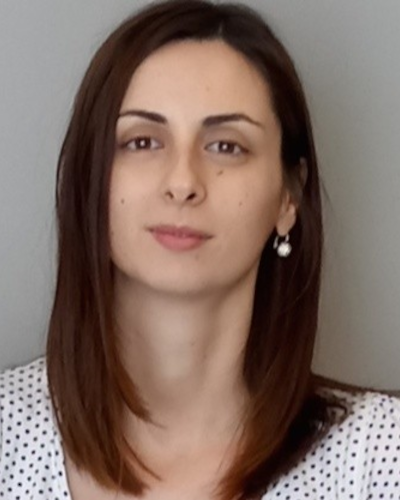 Stamatia Rizou
Stamatia Rizou
SingularLogic S.A.
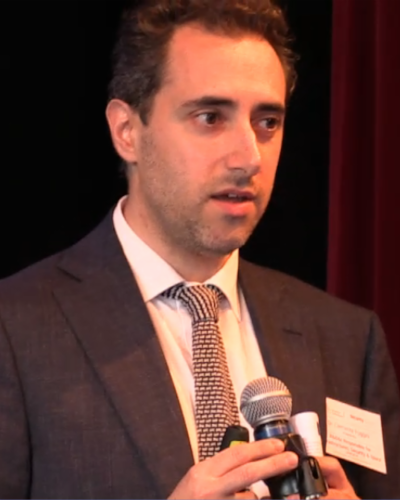 Clemente Fuggini
Clemente Fuggini
RINA S.P.A
SPECIAL SESSION DESCRIPTION
This special session focuses on innovative measures, monitoring tools, and digital services that enhance climate resilience in buildings and urban systems, with a strong emphasis on measurement science, sensing technologies, and data-driven decision support. As climate-related hazards such as heatwaves, flooding, wildfires, and seismic events intensify, the session highlights how metrology support can improve the safety, performance, and adaptability of the built environment. A key discussion point is the development of multiscale assessment and monitoring frameworks for climate resilience. These include refined metrics and indicators, sensor-enabled data acquisition, IoT-based monitoring infrastructures, BIM-integrated analytics, and interoperable data models capable of capturing structural, environmental, and functional performance under evolving climatic conditions. The session will explore how advanced modelling workflows, combining climate services, Earth observation, digital twins, and AI, can support the identification of vulnerabilities and the prioritization of adaptive interventions at building and district scale. The session will also address innovative measures and operational strategies supported by measurement technologies, including smart materials, nature-based and architectural adaptations, dynamic façades, early-warning systems, energy-efficiency solutions, and indoor environmental quality monitoring. Attention will focus on evaluating their effectiveness, robustness, multi-hazard applicability, and integration with digital platforms. In this framework, the coordinated use of environmental, structural, physiological, and user-feedback data, acquired through fixed and wearable sensors, enables the development of a digital ecosystem that captures the complexity of buildings and their occupants. Processed data provide indicators that feed AI models for predicting building conditions, assessing human responses to environmental stimuli, and generating Personal Comfort Models (PCMs). These models support advanced control systems, such as HVAC and lighting optimization, helping reduce energy use, improve user well-being, and enhance the overall resilience of the building–occupant system
Another core focus is the emergence of digital decision-support services tailored for strategic, tactical, and operational climate resilience. These services leverage sensor networks, real-time data streams, predictive analytics, and user-centric interfaces to guide municipalities, building owners, operators, and emergency actors in scenario exploration, renovation planning, performance tracking, and preparedness enhancement. Finally, the session welcomes contributions showcasing co-creation processes, living lab experiments, and pilot applications, illustrating how measurement-based evidence, stakeholder engagement, and real-world testing contribute to the design and validation of effective resilience solutions.
This Special Session offers an opportunity to present the CLIMRES project. funded under the Horizon Europe framework (Grant Agreement n. 101147777). CLIMRES focuses on developing tools, frameworks, and solutions that enable actionable and scalable strategies to address climate vulnerabilities, empowering communities and stakeholders to build a more resilient future.The session is also organized in the framework of the MULTICLIMACT project (GA n° 101123538), which aims to develop monitoring solutions to improve the resilience of the built environment and communities to natural hazards.
ABOUT THE ORGANIZERS
Serena Serroni is the founder of MoS srl and a Research Fellow at the Department of Industrial Engineering and Mathematical Sciences (DIISM) of UNIVPM. She works on European research and innovation projects focusing on Indoor Environmental Quality, real-time IoT-based monitoring, and the development of measurement techniques and digital services for the construction sector and the built environment. Her expertise spans scientific dissemination, communication strategies, sustainability and decarbonisation pathways, supporting stakeholders and organisations in adopting data-driven approaches for building performance and the energy transition. Serena holds a Master’s degree in Biomedical Engineering, a PhD in Thermal and Mechanical Measurement from UNIVPM, an International Executive Master from POLIMI, and an IPMA certification as Project Manager.
Vittoria Cipollone is a Research Fellow at the Department of Industrial Engineering and Mathematical Sciences (DIISM) of Università Politecnica delle Marche (UNIVPM). With a background in Biomedical Engineering and a PhD in Mechanical and Thermal Measurements, her research focuses on advanced measurement techniques and the development of digital services for comfort assessment aimed at promoting human well-being and health in both indoor and outdoor environments. Her expertise includes IoT sensing technologies for building and health applications, as well as data analysis through Artificial Intelligence and Machine Learning methods.
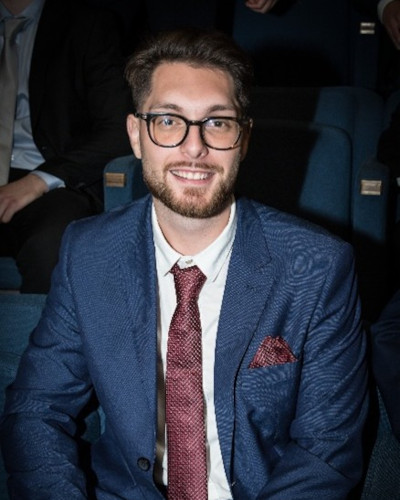
Richard Kaculi is a PhD Candidate in the Department of Industrial Engineering and Mathematical Sciences at Università Politecnica delle Marche. He holds both a Bachelor’s and a Master’s degree in Mechanical Engineering from the same institution. He completed his Master of Science with a specialization in Energy, graduating Summa Cum Laude.
His research targets the development of personalized comfort services and human-centric strategies designed to simultaneously enhance occupant well-being and optimize building energy efficiency.
Gian Marco Revel is Full Professor in Mechanical and Thermal Measurement at Università Politecnica delle Marche, where he is Rector Delegate for European Research. He received the Ph.D. degree in mechanical measurements from Università degli Studi di Padova in 1998. His research focuses on sensors and measurement technologies for buildings, health and industrial applications, with a particular focus on comfort and human behaviour and diagnostics.
Dr. Stamatia Rizou is the Manager of the R&D and Innovation department at SingularLogic, where she leads a multidisciplinary team of researchers in the fields of data technologies and AI-enabled applications. She holds a degree in Electrical and Computer Engineering from the National Technical University of Athens and a PhD in distributed systems from the University of Stuttgart.
Stamatia has more than 10 years of experience as a lead researcher in EU-funded research projects. She was awarded a Marie-Curie fellowship for her research in cloud computing and has co-supervised more than five PhD students. Currently, she participates as a project coordinator and lead researcher in EU-funded projects that develop innovative ICT solutions for various vertical applications. Finally, Stamatia has also served as an expert evaluator in the EU’s H2020 and Horizon Europe programmes.
Clemente Fuggini is Civil engineer with +15 years’ proven experience in research and innovation management, as well as deep technical knowledge on risk and resilience engineering for buildings and infrastructure. In the last ten years, involved in several international research & innovation projects, acting, as project partner and project coordinator. Currently Head of Research and Innovation in the Infrastructure and Mobility Business Unit of RINA. As such he oversees all R&I activities of the Business Unit with emphasis to the Built Environment, Construction and Infrastructure applications, as well as the Security and Resilience of Critical Infrastructure. Moreover, he is currently the Coordinator of the Horizon Europe Project MULTICLIMACT (MULTI-faceted CLIMate adaptation ACTions to improve resilience, preparedness and responsiveness of the built environment against multiple hazards at multiple scales). Author of +70 papers published in peer-reviewed journals, books, and conference proceedings. Reviewer for international peer-reviewed journals, including the International Journal of Critical Infrastructure Protection, Reliability Engineering & Systems Safety journal, Sustainable Cities and Society journal, Environmental Systems and Decisions Journal, International Journal of Disaster Risk Reduction.