SPECIAL SESSION #20
From Sensing to Digital Twins: Geomatics, Metrology and AI for the Built Environment
ORGANIZED BY
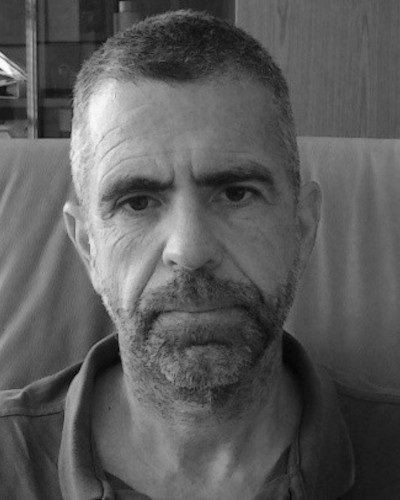 Enrico Corrado Borgogno Mondino
Enrico Corrado Borgogno Mondino
Department of Agricultural, Forest and Food Sciences (DISAFA), University of Turin, Grugliasco (TO), Italy
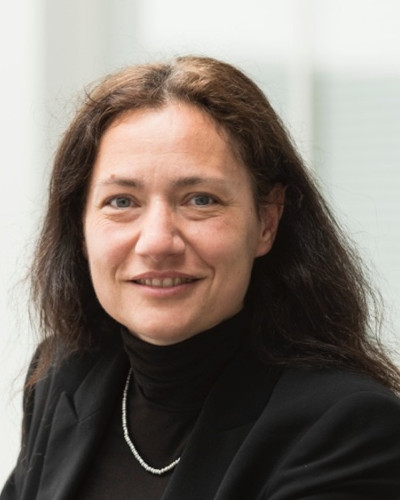 Raffaella Guida
Raffaella Guida
Surrey Space Centre, University of Surrey, Guildford, United Kingdom
 Francesco Lamonaca
Francesco Lamonaca
Department of Computer Science, Modelling, Electronics and System Science, University of Calabria, Rende (CS), Italy. Institute of Nanotechnology (CNR-NANOTEC), National Research Council of Italy, Rende (CS), Italy
 Alessandro Vitale
Alessandro Vitale
Department of Civil Engineering, University of Calabria, Rende (CS), Italy
SPECIAL SESSION DESCRIPTION
The increasing complexity of contemporary living environments, due to the need that built-up areas and urban spaces simultaneously satisfy health, comfort, energy, safety, maintenance, resilience, and sustainability requirements, demands advanced, integrated measurement frameworks capable of supporting the entire life cycle of the built environment, from design and construction to operation, maintenance, adaptation, and regeneration. In this context, geomatics, metrology, remote sensing, and artificial intelligence may assist decision-making processes converging into a common technological ecosystem for the acquisition, integration, analysis, and interpretation of multi-source and multi-scale data.
Recent advances in remote and proximal sensing, IoT-based monitoring, BIM/GIS integration, digital twins, and AI-driven analytics provide new perspectives on the built environment, enabling more accurate and dynamic assessments of buildings, infrastructures, indoor environments, and urban spaces. These approaches support applications in structural health monitoring, indoor environmental quality, safety, energy performance, comfort, predictive maintenance, and decision-making for sustainable and resilient living environments.
Building on these assumptions, this Special Session aims to gather innovative research contributions on methods, technologies, and applications that fully or partially integrate geomatics, metrology, remote sensing and AI to enable measurement-driven knowledge and management of the built environment. Particular attention will be devoted to interoperable, data-centric solutions that bridge sensing, modelling, monitoring, and digital representation across different spatial and temporal scales.
TOPICS
Original research articles and reviews are welcome for this Special Session. Topics of interest include, but are not limited to:
- integration of geomatics, metrology, and sensing techniques for the monitoring and management of buildings, infrastructures, and urban environments;
- BIM, GIS, and digital twin interoperability for the built environment life cycle;
- remote sensing, photogrammetry, LiDAR, UAV-based surveying, and mobile mapping for smart and resilient living environments;
- IoT, wireless sensor networks, and low-cost sensing solutions for indoor environmental quality, comfort, safety, and energy assessment;
- AI, machine learning, and data analytics for anomaly detection, predictive maintenance, diagnosis, and performance evaluation of the built environment;
- measurement solutions for structural health monitoring and risk assessment of buildings and infrastructures;
- multi-source and multi-scale data fusion for digital representation and monitoring of indoor and outdoor environments;
- uncertainty analysis, calibration, traceability, and data quality assessment in complex monitoring systems;
- 3D modelling, spatial analytics, and immersive visualization for digital management and decision support in living environments;
- innovative sensing and measurement approaches for building conservation, adaptive reuse, and sustainable regeneration.
We look forward to receiving your contributions to this Special Session.
ABOUT THE ORGANIZERS
Enrico Corrado Borgogno Mondino full Professor in Geomatics at the Dept. of Agricultural, Forest and Food Sciences (DISAFA) - University of Torino. 1996 - Master Degree in Environmental Engineering at Politecnico di Torino (Italy); 2004 - Ph.D. in Geodesy and Geomatics at Politecnico di Milano (Italy). Since 2002 lecturer in BSc, MS, post-graduate masters and PhD courses. Main research topics concern agro-forestry applications of Geomatics, included optical and SAR remote sensing, digital photogrammetry, LiDAR, GIS and survey. Author of more than 150 papers in National and International Scientific Proceedings, Journals and Books. Editor-in-Chief of MDPI Geomatics and editorial board member of many International Journals. President of the Italian Society of Remote Sensing (AIT) since 2023. President of the Italian Confederation of the Scientific Associations for Territorial and Environmental Information (ASITA). Member of the ASITA Scientific Committee. Chair of the Agriculture Special Interest Group (SIG) of the European Association of Remote Sensing Laboratories EARSeL. Scientific responsible of various national and international research projects and tutor of more than 40 BS, MS and PhD theses.
ORCID: orcid.org
Raffaella Guida is an Associate Professor in Satellite Remote Sensing at the Surrey Space Centre, University of Surrey, where she leads the Remote Sensing Applications research group. At the Surrey Space Centre she also covers the role of Director of PostGraduate Research.
She was educated in Italy where she received the Laurea degree (cum laude) in Telecommunications Engineering and the Ph.D. degree in Electronic and Telecommunications Engineering from the University of Naples Federico II. She joined the Surrey Space Centre as academic in 2008 and, since then, Raffaella contributed to generate multimillion economic impact for UK space companies (SSTL, Airbus, Satellite Vu) with regard to the field of maritime surveillance.
Raffaella has coordinated, as PI or co-I, national and international research projects on Earth Observation, with many of them involving exchange and know-how transfer programs with space agencies, companies and universities worldwide.
Her main research interests are in the fields of electromagnetics and microwave remote sensing, particularly in simulation and modeling of synthetic aperture radar signals, new remote sensing mission concepts and applications, satellite data fusion and interoperability.
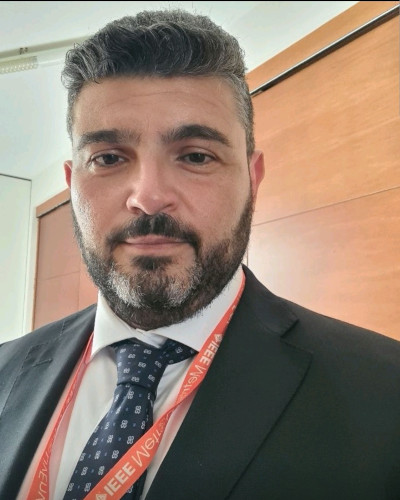
Francesco Lamonaca (Senior Member, IEEE) received the M.S. degree in computer science engineering and the Ph.D. degree in computer and system science from the University of Calabria, Cosenza, Italy, in 2005 and 2010, respectively, and the doctorate degree equivalences in science and engineering science from the Université Libre de Brussels, Brussels, Belgium, in 2010 and 2011, respectively. He is currently an Associate Professor of Electronic Measurements with the University of Calabria and Associate of the National Research Council of Italy (CNR) – Institute of Nanotechnologies (NANOTEC). His current research interests include measurements, distributed measurement systems, image and signal processing, signal processing for structural health monitoring, non-invasive monitoring and testing, IoT-based monitoring systems, synchronization of networking measurement instruments and sensor measurements for medical use, and measurements and systems for the elaboration of measurement information based on artificial intelligence. Prof. Lamonaca is a member of the TC-10—Waveform Generation, Measurement and Analysis, the TC-25 Medical Measurement, and the TC-37—Measurements and Networking of the IEEE Society on Instrumentation and Measurement (IM), IEEE, IM, GMEE, IAHR, and International Measurement Confederation (IMEKO). He was the Special Session Chair of MeMeA 2016 and organized the special session “Smart Devices for Biomedical Applications and Health Parameters Monitoring.” He is the Vice-Officer of Commission A—Electromagnetic Metrology of the Union Radio Scientifique Internationale (International Union of Radio Sciences)—Italian National Committee. He won competitions as first classified: the University of Calabria, Young Researchers 2010 and 2012; GMEE, Mobility Research Grants 2011; TE-RE-RD, Best Paper Awards 2014 and 2020, the Best Poster Award 2019, the IEEE Vehicular Technology/Communication Society Joint Chapter Italy Section Concerning with Innovative Ideas Against Corona Virus, 2020, and several outstanding reviewer awards. He is the Editor in Chief of Acta IMEKO. He is the Associate Editor of Sensors MDPI. He is the General Chair of the IEEE Workshop on Metrology for Living Environment since the first edition in 2022, and the IEEE conference on Metrology for Archaeology in 2022.
Alessandro Vitale is a Senior Researcher and Adjunct Professor at the Department of Civil Engineering, University of Calabria (Italy). His research expertise lies in geomatics, GeoAI, remote sensing, GIS-based spatial analysis, and photogrammetry, with applications to urban and territorial planning, environmental monitoring, smart agriculture, infrastructure systems, and climate impact assessment. He has authored more than 70 scientific publications indexed in Scopus and Web of Science and is actively involved in the international scientific community as an Editorial Board Member of Geomatics and Sensors (MDPI), a Guest Editor of several Special Issues, and a reviewer for leading Q1 journals. He has participated in and coordinated research activities within national and international projects (PRIN, PON, PNRR), contributing to the development of innovative geospatial methodologies and decision-support systems. His work is characterized by a strong interdisciplinary approach bridging geomatics, artificial intelligence, and spatial planning.