SPECIAL SESSION #17
Biostatistics, Machine Learning, and Metrology for Healthcare Living Environments
ORGANIZED BY
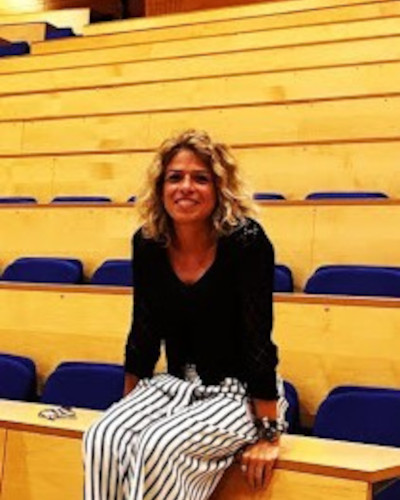 Antonella Iuliano
Antonella Iuliano
University of Basilicata, Italy
 Nicola Capece
Nicola Capece
University of Basilicata, Italy
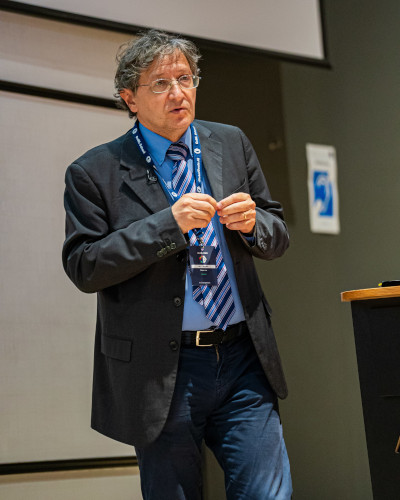 Pietro Liò
Pietro Liò
University of Cambridge, UK
 Donato Ferrari
Donato Ferrari
University of Calabria, Italy
SPECIAL SESSION DESCRIPTION
Biostatistics and Machine Learning offer powerful methodological frameworks for developing advanced statistical models that describe and interpret real-world phenomena. In the context of healthcare living environments, the integration of metrology plays a crucial role by enabling accurate measurement processes, supporting the identification of sources of variability, and contributing to their quantification and reduction.
This special session aims to address current gaps in the application of biostatistics, machine learning, and artificial intelligence to the analysis and assessment of healthcare living environments. A key strength of biostatistical approaches lies in their ability to explicitly characterize and manage the uncertainty associated with measurement data, which is crucial for making reliable decisions in healthcare-related contexts.
Particular emphasis will be placed on methodological developments and applied studies related to the quality of healthcare living environments, recognizing their direct and significant impact on human health, safety, and well-being. Contributions focusing on innovative models, data-driven approaches, and interdisciplinary applications are especially encouraged.
ABOUT THE ORGANIZERS
Antonella Iuliano is an Assistant Professor of Medical Statistics at the Department of Health Sciences of the University of Basilicata, Italy. She obtained her PhD in Mathematics in 2012 from the Department of Mathematics and Informatics at the University of Salerno, Italy. Her academic career includes post-doctoral research at the Institute for Applied Computing (IAC-CNR) in Naples, Italy, as well as multiple research appointments at the University of Cambridge, UK, where she worked as both a Visiting Researcher and Research Assistant. She also served as Senior Statistician in the Bioinformatics Core at the Telethon Institute of Genetics and Medicine (TIGEM), Pozzuoli, Italy. Her current research activity is strongly focused on Medical Statistics and Biostatistics, with an emphasis on the development and application of advanced statistical methodologies for healthcare and biomedical research. In particular, her work integrates statistical modeling, machine learning, and artificial intelligence to support precision medicine, clinical decision-making, and the analysis of complex, high-dimensional biomedical data. Her research interests span applications in medicine, biology, and environmental health, with a specific focus on methodological rigor, uncertainty quantification, and data-driven approaches in healthcare. She is actively involved in national and international research projects within the life sciences domain, and her work has been widely published in leading international journals and conference proceedings.
Nicola Capece is an Assistant Professor (tenure-track) at the University of Basilicata, Italy. His research focuses on Real-Time/Offline Rendering, Deep Learning, Computer Graphics, eXtended Reality (XR), and Human-Computer Interaction (HCI). He has authored 49 publications, including international journal papers and conference proceedings. He co-organized notable events such as the Workshop on Evaluation and Assessment in Software Engineers' Education (2023), Eurographics Italian Chapter (2023), Special Sessions and Workshop for IEEE MetroXRAINE (2022–2024). Additionally, he has contributed to three editions of the XR&AI Summer School (2022–2024). He is an associate editor for a Virtual Reality journal and a guest editor for several special issues. He also actively participates in organizing and program committees for international conferences. His projects focus on XR and HCI applications, including cultural heritage storytelling, virtual dressing rooms, 3D modeling in VR, and gesture recognition systems.
Pietro Liò is a Full Professor at the Department of Computer Science and Technology, University of Cambridge, where he is also a member of the Artificial Intelligence Group. He is affiliated with the Cambridge Centre for AI in Medicine. His research focuses on developing Artificial Intelligence and Computational Biology models to understand the complexity of diseases and to address personalized and precision medicine. His current work centers on Graph Neural Network modeling. He holds an MA from Cambridge and two PhDs: one in Complex Systems and Nonlinear Dynamics from the School of Informatics and the Department of Engineering at the University of Firenze, Italy, and another in (Theoretical) Genetics from the University of Pavia, Italy. He is a member of several prestigious committees, including the committee for the MPhil in Computational Biology (Stakeholder Group for the CCBI), the steering committee of Cambridge BIG Data, and VPH-UK (Virtual Physiological Human). He is also a Fellow and member of the Council of Clare Hall College, as well as a member of Ellis, the European Lab for Learning & Intelligent Systems. Additionally, he is a member of the Academia Europaea and is listed on www.topitalianscientists.org.
He serves as a member of the Complaint Officer/Examination Review Committee at Cambridge University and is a reviewer for four MPhils (Newcastle University). He is also part of the steering committee of VPH-UK. He has authored over 400 scientific publications in international journals and conference proceedings.
Donato Ferrari, is an Adjunct Professor of Financial Reporting and Statistics at the University of Calabria, Italy, and is currently involved in the ORSI Project (PNRR), where he is responsible for project reporting and statistical analysis. He obtained his PhD in Economics and Business Sciences in 2022 from the University of Calabria, with a dissertation focused on faculty careers and student evaluation in higher education.
His research activity focuses on applied statistics, econometrics, and multivariate analysis, with particular expertise in data analysis, regression and classification methods, panel and longitudinal data analysis, and spatial statistics.
He has held several research appointments, including Research Fellow positions at CREA (Rome) within Horizon Europe projects such as LENSES and Pro-GRACE, where he conducted statistical analysis and research activities. He is also involved in research projects on higher education, referee bias, gender disparities in academia, and data-driven approaches to faculty workload and evaluation systems.
His scientific production includes publications in international journals and conference proceedings, with contributions spanning sustainability, behavioural economics, geospatial analysis, and hybrid logical-statistical methodologies. He has presented his work at national and international conferences, including ESPE and the Italian Conference on Economic Statistics, and actively collaborates in interdisciplinary research initiatives involving statistics, artificial intelligence, and social sciences.